

The Importance of Structure in Men’s Clothing – Lessons from Military Tailoring

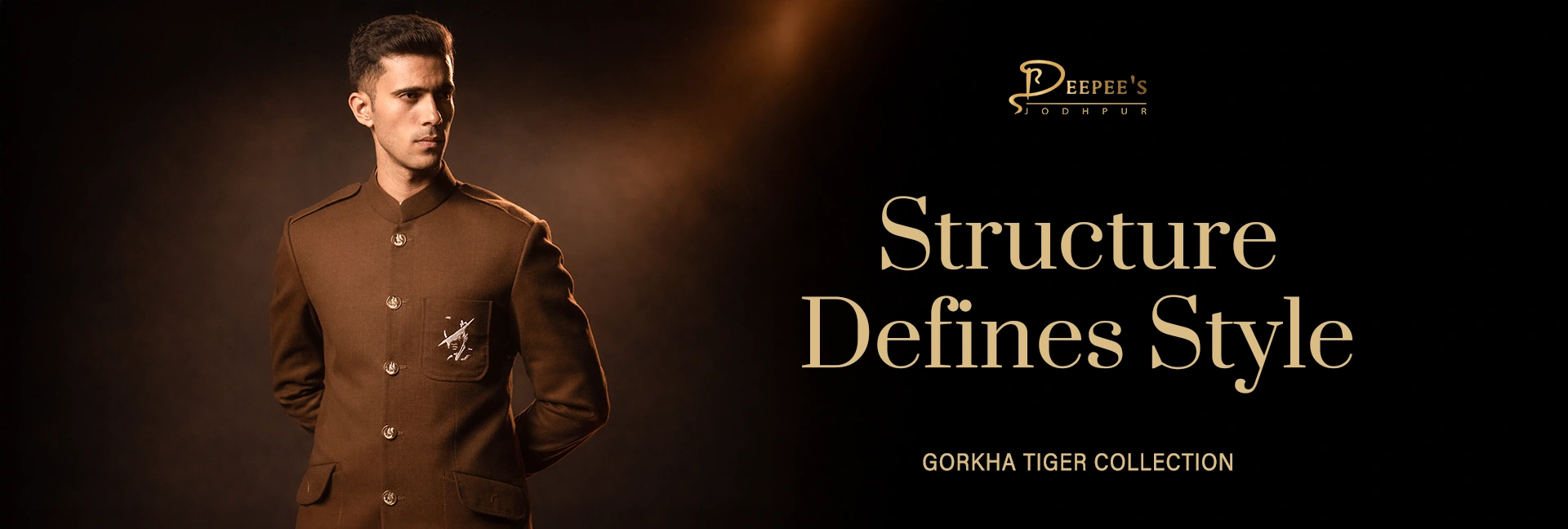
There are garments that look good, and then there are garments that tell a story. The Jodhpur Bandhgala falls into the second category. Often referred to as the “Jodhpuri suit,” this attire has long been associated with royalty, elegance, and timeless Indian craftsmanship. From the palaces of Rajasthan to global runways, the Bandhgala has stood the test of time, offering men a chance to look sophisticated without losing touch with tradition.
If you’ve ever wondered how to style this regal ensemble for weddings and formal occasions, this guide will walk you through everything—its origins, styling hacks, fabric choices, accessories, and more.
What Does “Structure” Mean in Men’s Clothing?
In simple terms, structure refers to how a garment is built to hold its shape on the body. It is the internal architecture of clothing — the canvas, padding, seams, and proportions that define how fabric falls and how the silhouette appears.
In structured menswear, this includes:
- Defined shoulders that support posture
- Clean lines that follow the body without clinging
- Balanced proportions between chest, waist, and length
- Tailoring that maintains form even after long wear
Structure ensures that clothing enhances the body rather than simply covering it.
Why Structure Matters More Than Trend
Trends change. Structure endures.
A well-structured garment remains relevant because it is built on human anatomy and posture, not seasonal fashion. This is why classic forms of tailored menswear — bandhgalas, jackets, and military-inspired coats — have outlasted trend-driven silhouettes.
The importance of structure in men’s clothing lies in its ability to:
- Improve posture and presence.
- Create a sharp, composed appearance
- Add longevity to garments
- Offer versatility across occasions
For Indian men, structured clothing is particularly effective in formal and ceremonial settings, where appearance communicates respect and authority.
Lessons from Military Tailoring
Military tailoring offers some of the clearest lessons in structure. Uniforms were designed to:
- Hold their shape through extended wear
- Present a disciplined and unified appearance
- Support movement without distortion
- Enhance authority through proportion and fit
Unlike decorative clothing, military tailoring prioritised balance and precision. These principles continue to influence modern tailored clothing for men, especially in luxury menswear.
Elements such as structured shoulders, sharp lapels, and clean closures can all be traced back to military design.
Structured Menswear and the Psychology of Confidence
Clothing does more than alter appearance — it affects behaviour. Structured garments naturally encourage better posture, steadier movement, and increased self-awareness.
When a man wears structured menswear, he often:
- Stands taller
- Moves with intention
- Feels more composed in social and professional settings
This is why structure is central to power dressing. The garment supports the wearer, both physically and psychologically.
Structure vs Soft Silhouettes: What Works Better?
Soft, unstructured clothing has its place in casual wear. However, for formal occasions, structured tailoring remains unmatched.
Structured garments:
- Frame the body cleanly
- Photograph better in ceremonial settings
- Retain elegance across long events
- Signal maturity and confidence
In contrast, poorly structured clothing can appear tired, shapeless, or informal — especially in settings that demand refinement.
The Role of Structure in Indian Formalwear
Indian menswear has long embraced structure, even before modern tailoring. Traditional bandhgalas, achkans, and sherwanis were designed with internal construction that gave them form and authority.
Today, structured Indian formalwear continues to evolve by blending:
- Traditional silhouettes
- Modern tailoring techniques
- Military-inspired precision
This approach creates garments that feel timeless, powerful, and relevant for modern Indian men.
Why Structured Menswear Is Making a Strong Comeback
As men move away from trend-heavy fashion, there is renewed appreciation for clothing that lasts — both stylistically and physically.
Indian men are increasingly choosing:
- Tailored bandhgalas over embellished sherwanis
- Structured jackets over casual blazers
- Precision tailoring over loose fits
This shift reflects a deeper understanding of the importance of structure in men’s clothing, and a desire for menswear that aligns with confidence and purpose.
Why Structured Menswear Is Making a Strong Comeback
As men move away from trend-heavy fashion, there is renewed appreciation for clothing that lasts — both stylistically and physically.
Indian men are increasingly choosing:
- Tailored bandhgalas over embellished sherwanis
- Structured jackets over casual blazers
- Precision tailoring over loose fits
This shift reflects a deeper understanding of the importance of structure in men’s clothing, and a desire for menswear that aligns with confidence and purpose.
Frequently Asked Questions
Structure in men’s clothing refers to the internal construction of a garment — including canvassing, padding, seams, and proportions — that helps it hold shape, enhance posture, and create a defined silhouette.
The importance of structure in men’s clothing lies in how it improves appearance, confidence, and longevity. Structured garments frame the body better, maintain their form through wear, and look more polished in formal settings.
Military tailoring is a design approach rooted in discipline and precision, focusing on structured shoulders, clean lines, and balanced proportions. It prioritises durability, authority, and clarity of form over decoration.
Military tailoring influences modern menswear by introducing structured silhouettes, precise cuts, and functional design. Many formal jackets, bandhgalas, and coats borrow these principles for timeless appeal.
Structured menswear includes garments that are carefully tailored to hold their shape, such as jackets, bandhgalas, and coats with defined shoulders and internal support. These pieces offer a sharp, composed appearance.
Yes. Structured clothing works particularly well for Indian men in formal and ceremonial settings, such as weddings and evening events, where posture, presence, and elegance matter.
Structured clothing encourages better posture and movement, which naturally enhances confidence and presence. This is why structured garments are central to power dressing.
Structured clothing maintains a defined silhouette and form, while unstructured clothing is softer and more relaxed. Structured garments are better suited for formal occasions, while unstructured styles work well for casual wear.
No. Well-made structured clothing is designed to support posture without restricting movement. Good tailoring actually feels more comfortable over time.
Yes. Structured menswear works well for Indian body types when tailored correctly, as it balances proportions and enhances posture.
Yes, when the right fabrics and internal construction are used. Quality tailoring ensures structure without unnecessary heaviness.
No. Structured clothing suits men of all ages, especially those who prefer a sharp, composed appearance for formal occasions.
Structure as the Foundation of Timeless Menswear
Structure is not about rigidity. It is about balance, control, and intent.
By learning from military tailoring and embracing structured menswear, men can build wardrobes that feel reliable, elegant, and enduring. In a world of fast fashion, structure remains one of the few constants that defines true craftsmanship in tailored clothing for men.
For brands like Deepee’s Jodhpur, structure is not a design choice — it is a philosophy rooted in tradition, discipline, and respect for the wearer.
Conclusion
A Tailoring Philosophy Rooted in Structure at Deepee’s Jodhpur
At Deepee’s Jodhpur, structure is not an aesthetic choice — it is the foundation of good menswear. Guided by celebrity designer Abhishek Trivedi, the brand’s approach to tailoring draws from discipline, balance, and precision inspired by military craftsmanship. Every garment is designed to hold its form, support posture, and move with the wearer, making structure a lived experience rather than a visual detail.
This philosophy reflects what structured clothing should always do:
- Enhance posture naturally
- Maintain shape through long wear
- Create a composed, confident silhouette
To experience this approach to tailoring, browse the collection at www.deepeesjodhpur.com, or visit Deepee’s Jodhpur, 2nd Polo, Paota C Road, Jodhpur (Raj.).
For sales and enquiries, call +91 9530123489. Shop now to get your outfits customised and delivered right to your doorstep.